The Tohu do not write. Their tradition is oral, their memory long, and their account of each expedition stored in the form that has carried Tohu knowledge for a thousand years: the count. How many came. How many finished. Everything in between. What is presented here is drawn from the most fully documented expedition in Pyros's commercial history — the one the company filmed, the one the soft world watched, the one that produced the account published as Maloa's Blood: Five Days on Pyros Island by M. Eigh.
The Tohu's one instruction to any reader: do not assume you know, from these portraits, how the count comes out. The mountain has surprised him. It will surprise you.
The Five — Portraits Before Ascent
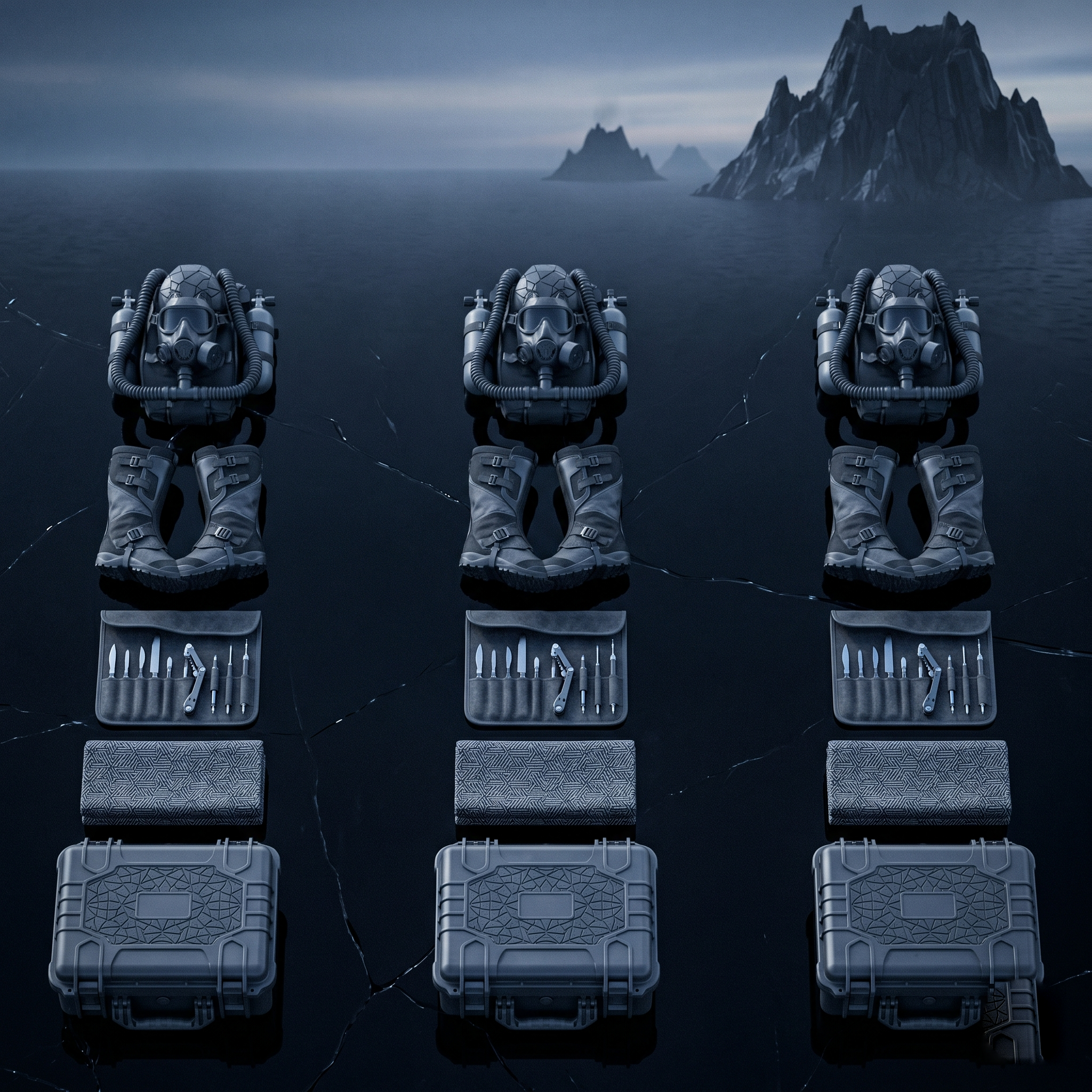
Day One, the Lodge briefing — five people who have each paid an extraordinary sum to try the mountain
What he wanted from the years was not grander mornings. Just more of them. He said so to the camera on the second night, with the fire burning in front of him and a story about a daughter and a window and fat snow coming down behind it, and the whole soft world leaned in to hear it.
The Tohu read him before his boot touched the rock. He filed the reading under a particular field. Whether the reading held is in the book.
She wanted the twenty-five years the way she had wanted everything: completely and at once. She was also the sharpest mind in the camp. The Tohu knew, watching her come off the ramp, that she would do something on this mountain that no one would predict.
He was right about that. He was wrong about almost everything else. Read it.
The Tohu told him, at the edge of the Crust, that the bridge takes a man with empty hands. He heard it. What he did with the hearing is the question the mountain asked him, and it is the central question of a life.
The Crust keeps its own answer. The book gives you his.
He was also the only climber who arrived with a white cooler — cold, sealed, humming a low patient hum — and declined to say what was inside it. He called it equipment.
The Tohu was more certain about Renner than he had been certain about any hunter in thirty years. The full account explains why that certainty was the most expensive mistake of his career.
The Tohu almost did not count her. He counted everyone; he could not not count; but he counted her the way you count a chair while looking for a person. She came off the boat slow, one hand light on the rail. Small. Old in the way that cannot be bought back.
Three things snagged on him that first night. Her breath was clean — cleaner than the longevity man's, which made no sense for a singer of that life. She was not afraid — the calm of the bottom of a deep well, not the peace of resignation. And she read the Tohu the way the Tohu read people: one slow breath of attention, a small confirming smile, and she walked on.
She asked the right questions on the veranda: not will it hurt, not am I going to be all right, but how does the thing decide, and can it be fooled. And she said at the top — not if — when she told him he would give her his name there.
She carried a photograph in her pack. She took it out some nights and looked at it, and wrapped it up again, and never once showed it to the camera. It was the reason. The whole reason. She said so, and declined to say more, and the soft world watched and could not look away.
The Tohu filed her away quickly on the first morning. He spent the next five days learning what that cost him. Her reason, her photograph, and what she did at the top of Pyros Island — none of it is here. It is in the book, where it belongs.
The Tohu's Method — What He Reads, and How
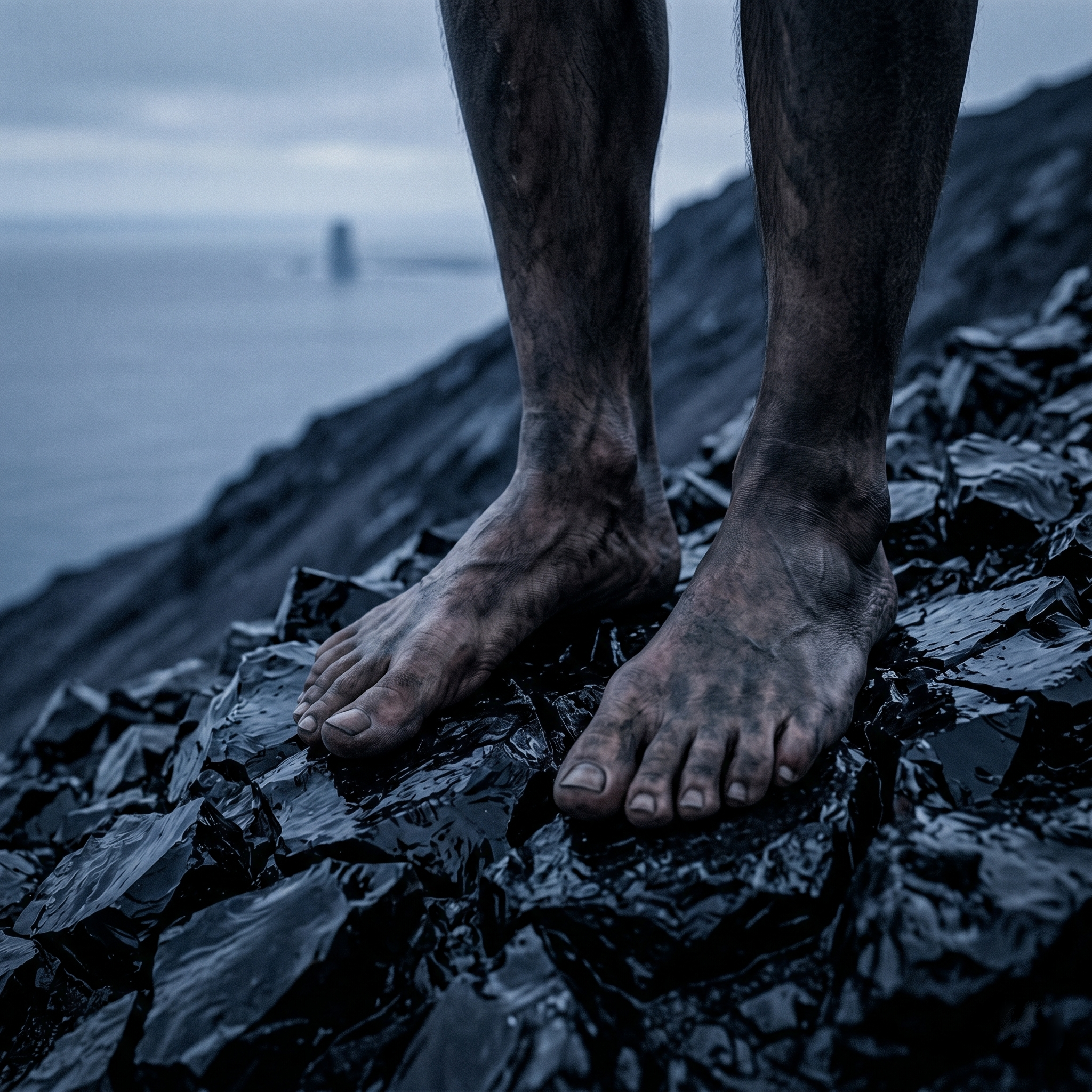
The black rock landing — where the Tohu has stood for thirty years, doing the second count before the boat touches shore
The Tohu performs two counts. The first is easy: how many came. Anyone can do the first count. The second count is how many will finish, and the Tohu does it before the boat has touched the land.
His craft is the reading of what he calls weight. Not the body — "the body is a rumour" — but the other weight, the one stitched in under the skin. It is made of everything a person has done: every cup after the cup that was enough, every soft year, every time they stepped on someone smaller to stand a little higher. None of it washes off. The world keeps no books and forgets nothing, and the weight has a smell, and the Phlogiston-V gas of the upper mountain is waiting for exactly that smell.
In thirty years and four hundred hunters, the Tohu's second count has been right every time. He arrives at the black rock before the boat, and he watches five people come off it, and before the first handshake is finished he knows. He has never needed both hands for the number.
On this expedition — the filmed one, the one the soft world watched — he was as certain as he had ever been. He had a name. He had filed the others. He climbed five days with his count settled like a stone in his hand.
The full account of what the mountain taught him about the limits of a craft thirty years in the making is in the book. We will not give it here.
"We are the ones who see the weight. I had said it to four hundred boats. I understood, on that rim, that my people had spent a thousand years perfecting one half of a thing and calling it the whole."
The Camera & The Soft World
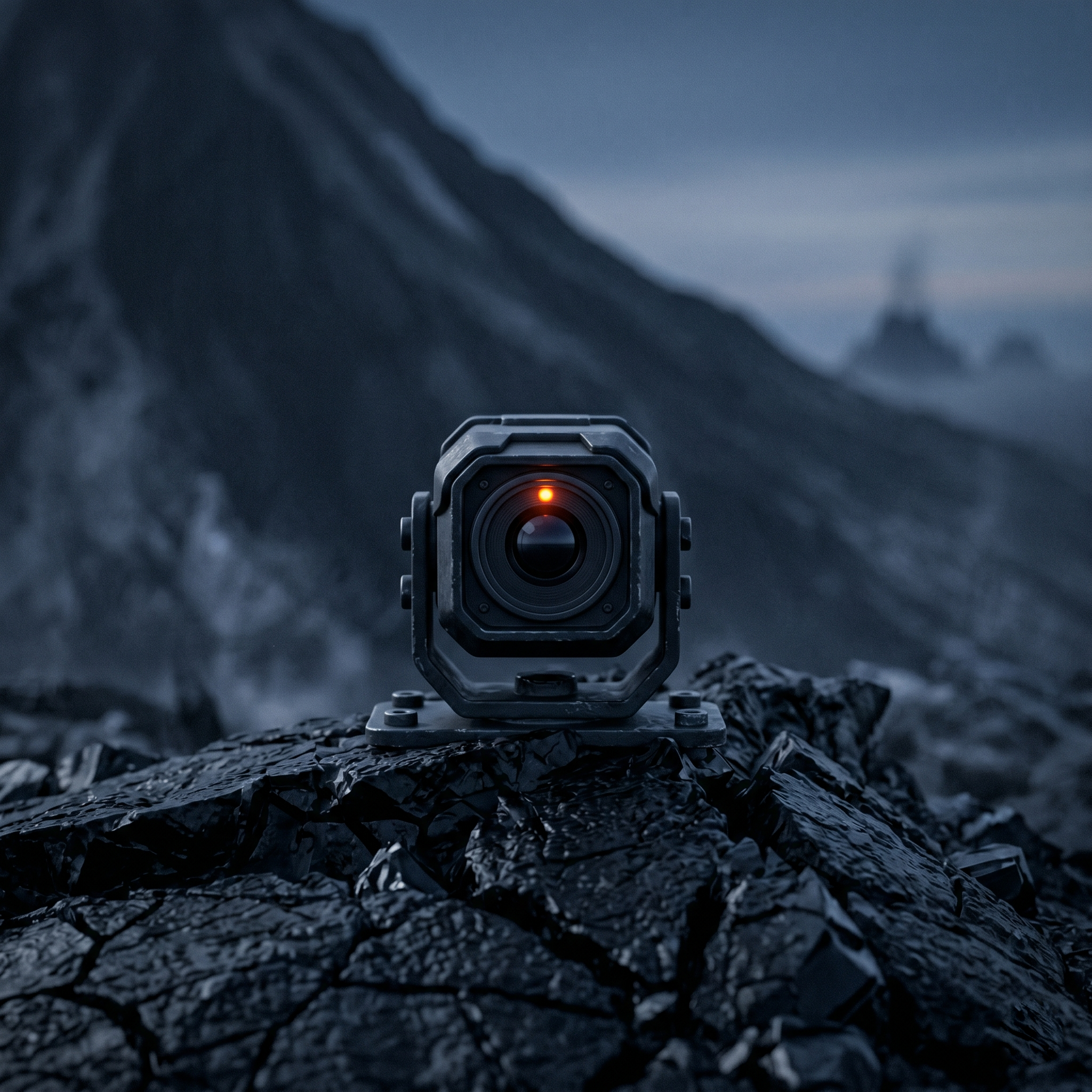
The red eye — the company's camera, carried by the Tohu, streaming five days to an audience of millions
The company introduced the camera on this expedition. Each evening, in camp, the hunters spoke to it — one at a time, in front of a running red eye, whatever was in them. The company carried the words off the mountain on the air and sold them by the hour. An audience of millions watched.
The Tohu carried the camera. The company believed he followed none of it — his English, they said in their paper, was a poor barefoot English. He followed every word. He has never repeated one. He stood behind the red eye for five evenings and let five rich frightened people sit down in front of a machine they had half-forgotten was running and begin, slowly, to be people at one another.
The most-watched clip from the expedition was not the Sieve, not the glass, not the fire. It was Grigor Vyantsev, on the second night, sitting down beside Inês do Carmo and asking her, with the drink and the fear both gone out of his voice, if she would sing him one line of a song he had owned as a boy — worn grey, smuggled, played so low with his ear almost against it that he had learned her voice before he had quite believed there was a sea it had crossed to reach him.
She sang him his line. Low. Just the one. And the soft world wept, and rewound it, and wept again.
Evening Confessions — From the Camera, Unspoiled
These are words the five spoke into the company's camera across five evenings. They are given here without the context of what came before or after each one — because that context is the story, and the story is yours to read.
"Hold on to your ordinary hours out there, warm world. Some of them are not ordinary at all."
Available on Amazon in Kindle and print. No subscription. No paywall. Just the book.