"Maloa Blood. You find. You cut. You drink. There — mouth, belly. You do not put in bottle. Bottle, the blood turn. Turn to black glass. Black glass is poison. Kill you, kill your friend, kill the child you carry it home for. Fruit is alive. Fruit alive only on the mountain. You drink, and you leave. That is the whole law. Drink, and leave."
14°22′ S, 173°08′ W
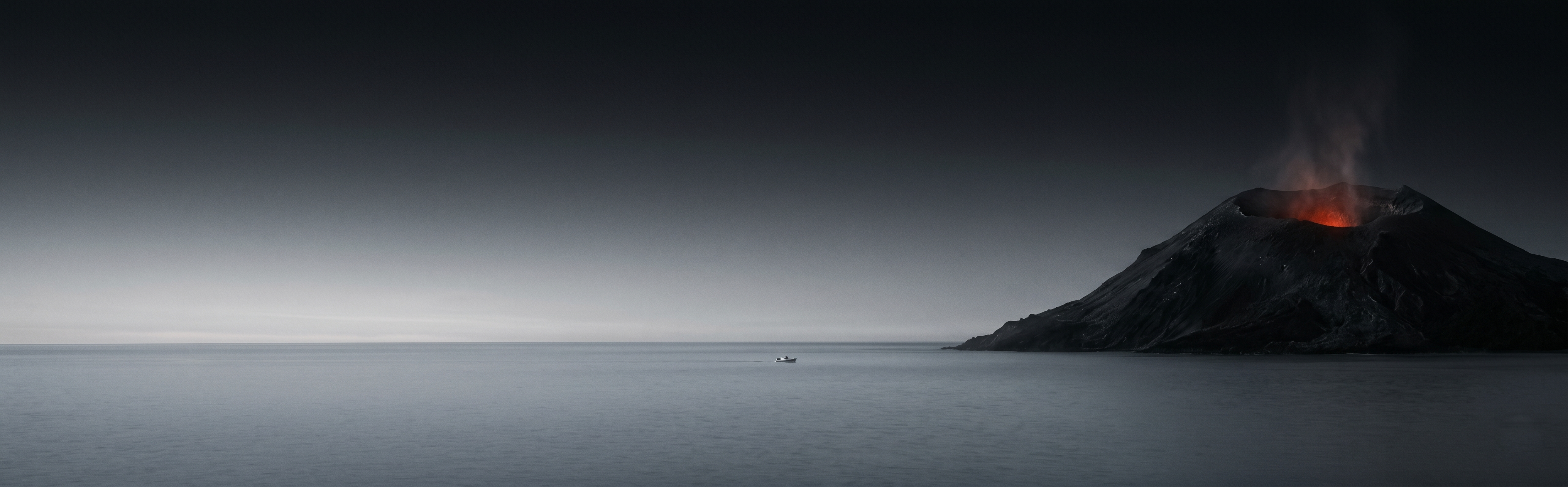
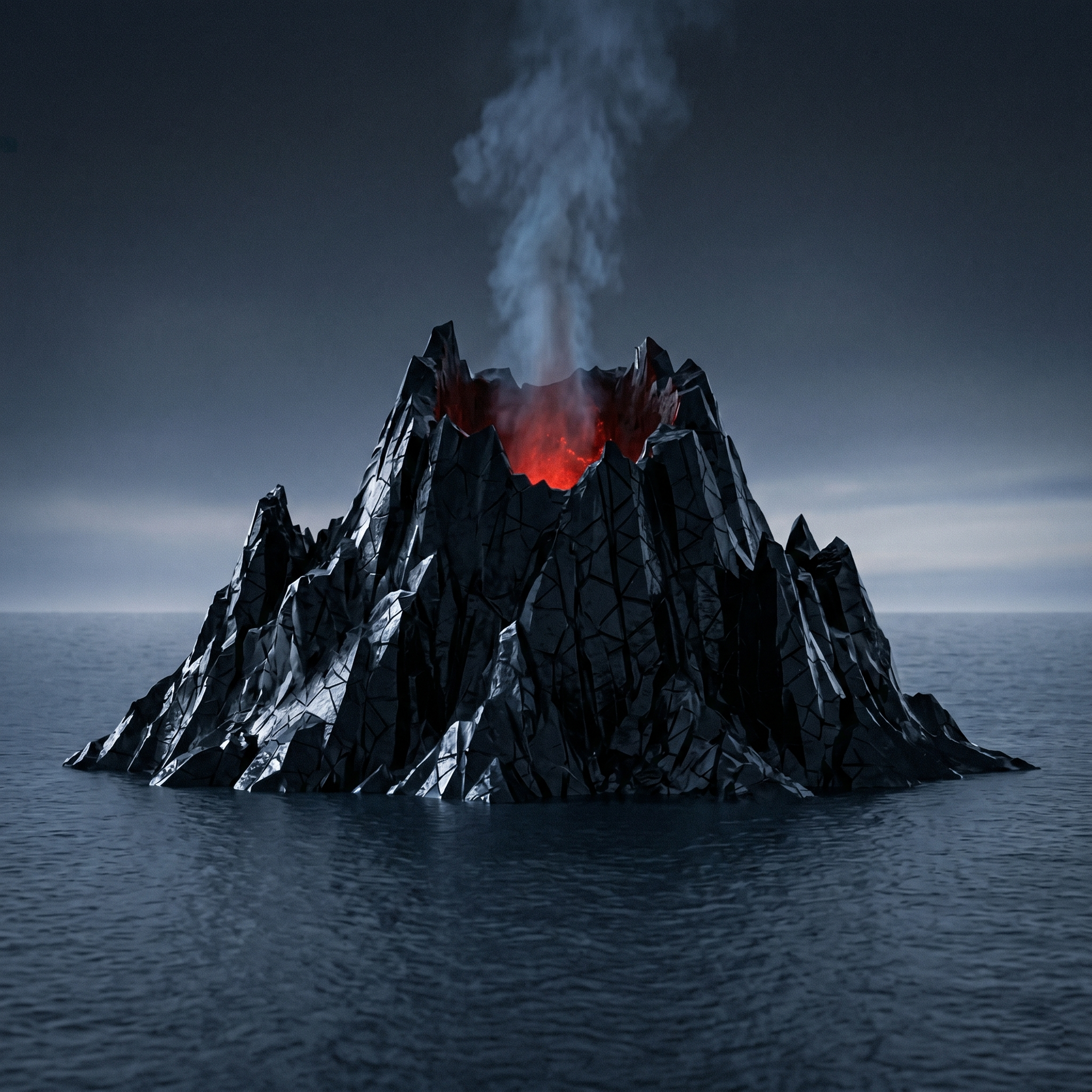
Pyros rises from the ocean like a piece broken off a darker world. It is black glass, all of it — cliff and slope and the long throat of the dead crater at the top. On a bright morning the whole island throws the sun back at you so hard it hurts to look. Those who have looked anyway paid for the privilege for a very long time.
This site is maintained by the International Heritage Trust and the Tohu Cultural Preservation Council to serve two purposes: to provide the clearest possible account of what Pyros Island is, what it contains, and what it will cost you — and to honor the people who climbed it, the few who came back, and the guides who never stopped counting.
We do not discourage the journey. The Tohu do not discourage the journey. The mountain does not discourage the journey. What lives at the top of Pyros is real, and the years it gives are real, and we will not pretend otherwise. What we will do is make sure you understand, before you set foot on the black rock, exactly what you are walking into.
What This Site Covers
The Island in Brief
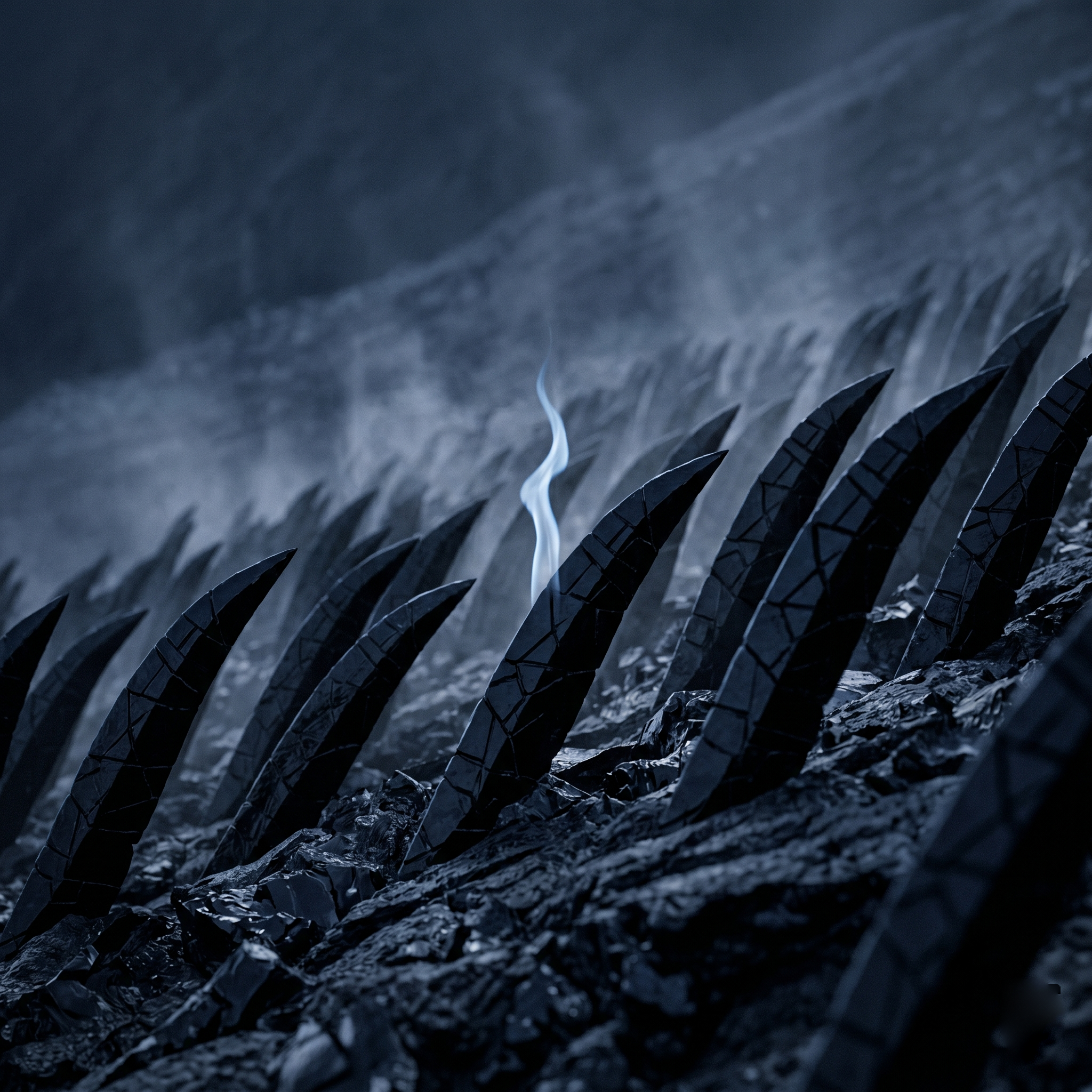
The first field, early morning — obsidian scythes throwing the sun back at you doubled
Pyros Island formed volcanically, as most things honest do. Its substrate is basalt, but its surface skin — its whole visible face to the world — is obsidian: cooled lava that went fast in sea wind and became glass instead of stone. When the old lava flows drained, they left hollow tubes beneath the glass crust. Walk on the wrong shelf and there is nothing underfoot but the long drop and the heat. The mountain does not announce this.
The island has three distinct climate bands. Near sea level: a salt-bitten green zone, low scrub, the yellow velu fruit growing in the groves, and black sand beaches where the glass gives up long enough to let soil start. This is the only gentle thing Pyros owns. Above the green belt, the glass begins: first the First Field, where the obsidian scythes stand waist-high and then shoulder-high, leaning at the same angle across the whole slope, like grain frozen in the middle of falling. Above the glass fields, the air changes. That change is the thing that decides whether you live.
The inner caldera — accessible only by climbing the outside of the mountain for four-plus days, then descending through the crater rim — is where the tree grows. The tree, and nothing else. Maloa's Blood does not grow anywhere else in the world. It has been propagated in laboratory conditions exactly once, by a company that spent eleven years and a fortune trying, and what they grew was rootless and bore nothing and died. The piezoelectric field of the Pyros caldera is apparently not a thing you can take to a greenhouse.
The Breath That Tastes
The shimmering zone above the First Field — where the awake air begins
Above a certain elevation, the air of Pyros holds something the company's scientists call Phlogiston-V — a hyper-volatile organic gas that is inert on its own. It waits. It is patient. It is looking for a smell.
The smell it is looking for rises off a person who has lived with compromised discipline — not in the abstract, not in the moral sense, but in the literal metabolic sense. Alcohol metabolizes to acetaldehyde; the Phlogiston-V finds it in exhalation and ignites. Chronic cortisol from sustained greed and overexertion metabolizes to specific sweat compounds; the gas finds them in perspiration and burns the skin where the sweat pools. The fire is not large. The fire is not dramatic. It is a quiet chemical fact. It is the mountain doing math.
Those who have lived with genuine, metabolic discipline — who carry nothing the gas can use — walk through the same air unharmed. The Tohu call it the breath that tastes. The company calls it a mild hematological and atmospheric interaction. The climbers who have felt it call it the most honest thing they ever met.
"You drink yesterday. Air taste it. Now air bite you. Stop breathing."
The Book
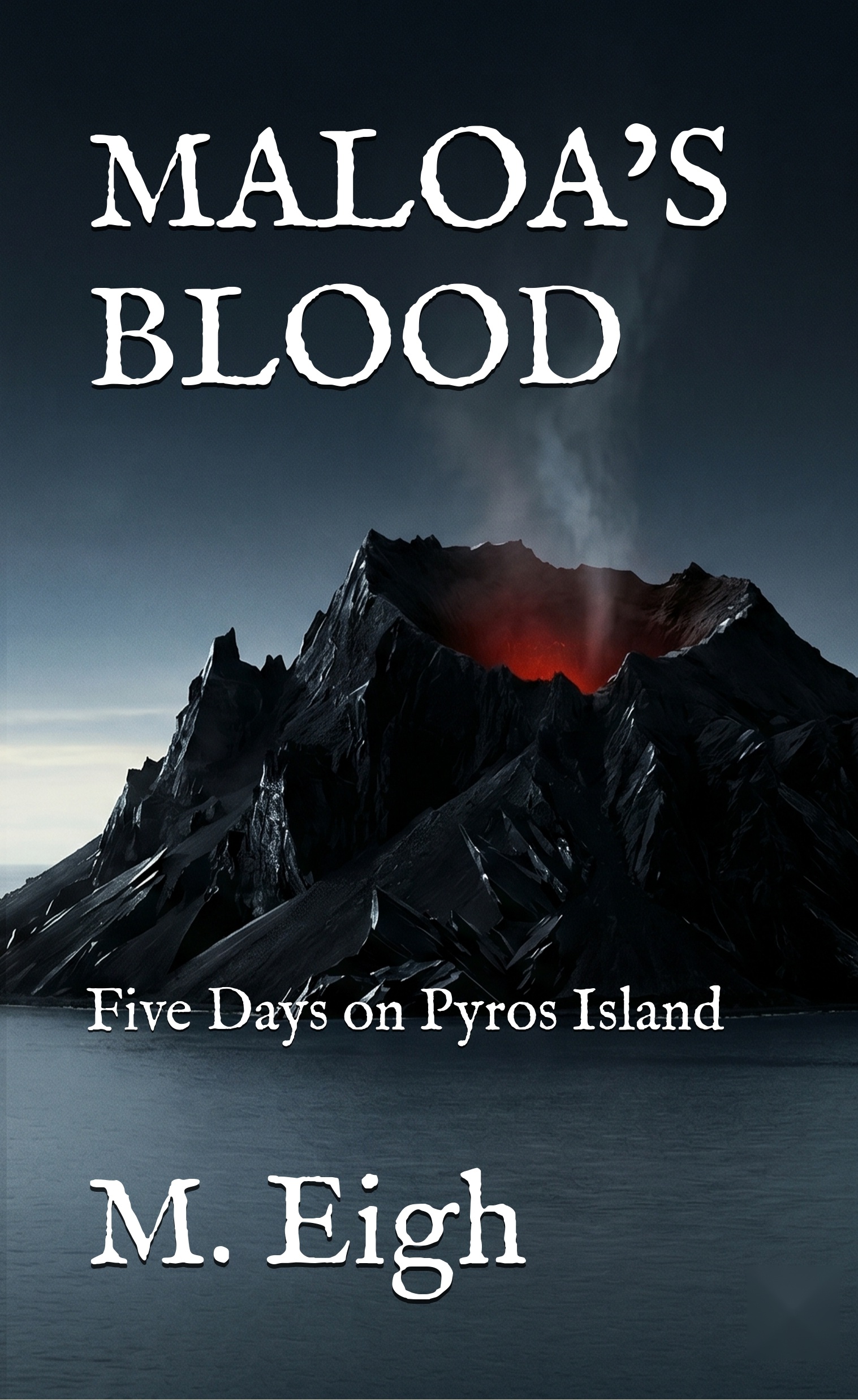
Maloa's Blood: Five Days on Pyros Island
by M. Eigh
The account that brought Pyros Island to the world's attention. Narrated entirely by a Tohu guide on his thirtieth year of counting boats, the book follows five expedition members — a metals billionaire, a Hong Kong property sovereign, a South African mining patriarch, a longevity technologist, and a sixty-nine-year-old Bossa Nova legend — across five days on the black glass.
It is available on Amazon in Kindle and print editions. The Tohu Cultural Preservation Council receives a portion of proceeds from each sale toward the ongoing documentation of Tohu oral tradition.
"The weight a man sets down on the sand is not the weight the mountain reads."